
The leaching of Copper
Leaching is a hydrometallurgical process to extract valuable metals, such as Copper, from ores. The main advantage of leaching is that it can selectively dissolve specific minerals, making it more efficient and environmentally friendly than traditional pyrometallurgical processes. In the case of copper ores, leaching is significant for low-grade ores that are not suitable for smelting.
Several methods of leaching copper ores include acid leaching, ammonia leaching, and bacterial leaching. Here, we will focus on acid leaching, the most widely used process for copper extraction.
Acid leaching: Acid leaching involves using an acidic solution, typically sulfuric acid, to dissolve the copper minerals. The main reactions involved are:
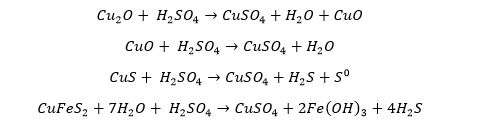
The leaching process can be conducted in heaps, vats, or in situ, depending on the ore’s nature and the operation’s requirements. Note that most ores are not a hundred percent oxides, secondary sulfides, or primary sulfides. They are often mixed with one of the phases (i.e., oxide, secondary or primary sulfides) being dominant. This is why the reactions above oxides and sulfides.
i) Heap leaching: Heap leaching is suitable for low-grade copper ores, typically containing less than 1% copper. The ore is crushed and agglomerated, then stacked in heaps on a pad lined with an impermeable material to prevent seepage. An acidic solution is sprayed or dripped onto the heap, percolating through the ore and dissolving the Copper. The copper-rich, pregnant leach solution (PLS) is collected at the bottom of the heap and sent for further processing.
ii) Vat leaching: Vat leaching involves using large tanks or vats, where the crushed ore is mixed with the acidic solution. The solution is circulated through the ore to dissolve the Copper, and the PLS is drained and sent for further processing. Vat leaching is faster than heap leaching but requires more infrastructure and is typically used for higher-grade ores.
iii) In-situ leaching: In-situ leaching involves injecting the acidic solution directly into the ore body, which dissolves the Copper in place. The PLS is then pumped to the surface for further processing. In-situ leaching is used for deep or inaccessible ore bodies and has the advantage of minimal surface disturbance.
Leaching is an essential process for extracting Copper from low-grade ores or those unsuitable for smelting. Acid leaching with sulfuric acid is the most common method, and the leached Copper is recovered through solvent extraction and electrowinning processes.
Pressure leaching: Pressure leaching is an advanced hydrometallurgical process used to extract Copper from copper sulfide concentrates, particularly chalcopyrite (CuFeS2) and bornite (Cu5FeS4). In pressure leaching, the concentrate is subjected to high temperature and pressure in the presence of an acidic or alkaline solution to dissolve the Copper. This process can achieve high copper extraction rates and is particularly useful for concentrates with high impurities, making smelting difficult.
There are two primary methods of pressure leaching for copper concentrates: high-temperature acid leaching (often referred to as autoclave leaching) and high-temperature alkaline leaching.
High-temperature acid leaching (autoclave leaching):
In autoclave leaching, the copper concentrate is mixed with an acidic solution, typically sulfuric acid, and heated in an autoclave under high pressure (normally 10-30 atm) and temperature (180-240°C). The high temperature and pressure accelerate the leaching process, resulting in faster dissolution of the copper minerals.
The main reactions involved in autoclave leaching of chalcopyrite are:

Once the leaching is complete, the slurry is cooled, and the solids separated from the copper-rich solution (PLS). The PLS is then subjected to solvent extraction and electrowinning processes to recover the Copper.
High-temperature alkaline leaching:
In high-temperature alkaline leaching, the copper concentrate is mixed with an alkaline solution, typically sodium hydroxide (NaOH) or ammonia (NH3) and heated under high pressure (10-30 atm) and temperature (120-200 °C). This process is particularly suitable for treating complex Copper concentrates with high levels of impurities, such as arsenic.
The main reactions involved in the alkaline leaching of chalcopyrite are:

After leaching, the solids are separated from the copper-rich solution (PLS) and subjected to copper recovery processes, such as solvent extraction and electrowinning or precipitation as a copper salt (e.g., copper hydroxide or copper carbonate).
In summary, pressure leaching of copper concentrates is an advanced hydrometallurgical process that can achieve high copper extraction rates and is particularly suitable for treating complex or impure concentrates. The main methods include high-temperature acid leaching (autoclave leaching) and high-temperature alkaline leaching, both of which involve heating the concentrate slurry under high pressure in the presence of an acidic or alkaline solution.
Copper recovery: After leaching, the PLS is sent to a solvent extraction (SX) plant, where an organic solvent selectively extracts the Copper, forming a copper-rich organic phase. The Copper is then stripped from the organic phase using an electrolyte solution, and the resulting copper-rich electrolyte is sent to an electrowinning (EW) plant. In the EW plant, an electric current is passed through the electrolyte, causing Copper to plate out as a pure metal on the cathode.
Solvent Extraction
Solvent extraction is a separation process involving extracting one or more components from a liquid mixture using a solvent. The process is widely used in chemical, metallurgical, and biochemical industries to separate and purify different substances. At a technical or graduate level, understanding solvent extraction involves a deep knowledge of thermodynamics, kinetics, mass transfer, and process optimization. The basic principle of solvent extraction involves using a solvent that can selectively dissolve the desired component from a liquid mixture. The solvent is chosen based on its ability to form a complex with the selected component while leaving the other species behind. This organic complex is then separated from the remaining aqueous solution through physical separation methods such as settling (mixer settler), filtration, or centrifugation.
The efficiency of the solvent extraction process depends on several factors, such as the solvent’s and solute’s chemical properties, temperature, pressure, and concentration of the solute in the liquid mixture. The thermodynamics of the process is governed by the distribution coefficient (Kd), which represents the ratio of the concentration of the solute in the solvent phase to its concentration in the feed phase at equilibrium. The Kd value is affected by the chemical nature of the solvent, the solute, and the feed composition.
To optimize the solvent extraction process, it is vital to consider the kinetics of the process, which involves the rate of mass transfer of the solute between the feed and solvent phases. The rate of mass transfer is influenced by several factors, including the interfacial area between the two phases, the solute diffusion coefficient, and the fluid flow rate.
One of the challenges in solvent extraction is to ensure that the solvent and the solute are adequately mixed (review mixing theory) and contacted to maximize extraction efficiency. This is achieved using different extraction equipment such as mixers, settlers, and columns. The choice of equipment depends on the specific requirements of the process and the physical and chemical properties of the separated species.
Solvent extraction is, therefore, a complex process involving a deep understanding of thermodynamics, kinetics, and process optimization. Its versatility and efficiency make it a vital separation technique in the chemical, metallurgical, and biochemical industries.
Solvent Extraction Thermodynamics
Thermodynamics applies to solvent extraction. Here are some of the thermodynamic equations commonly used in solvent extraction:
Distribution Coefficient (Kd): The distribution coefficient represents the equilibrium partitioning of a solute between two immiscible phases, usually an aqueous phase and an organic phase, in solvent extraction. The Kd value can be calculated using the following equation:
Kd = [solute]organic / [solute]aqueous
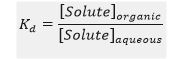
where [Solute]organic and [Solute]aqueous are the concentrations of the solute in the organic and aqueous phases, respectively.
Extraction Efficiency (E): The extraction efficiency represents the fraction of the solute that is extracted from the feed solution by the solvent. It can be calculated using the following equation:

V_(feed solution(aq)) and V_(extracting solvent) are the volumes of the feed solution and the solvent used, respectively, and C_(solute in feed) and C_(solute in extracting sol) are the concentrations of the solute in the feed solution and the extracted solution, respectively.
Equilibrium Constant (Kex): The equilibrium constant represents the extent of the reaction between the solute and the solvent. It can be calculated using the following equation:
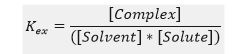
where [complex], [solvent], and [solute] are the concentrations of the solute-solvent complex, the solvent, and the solute, respectively.
Gibbs Free Energy (ΔG): Gibbs free energy represents the amount of energy that is available to do valuable work during a chemical reaction. It can be calculated using the following equation:
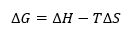
where ΔH is the enthalpy change, T is the temperature, and ΔS is the entropy change. These equations are just a few examples of the thermodynamic equations used in solvent extraction. The specific equations and parameters used depend on the particular system being studied and the properties of the solute and solvent.
Kinetics of Solvent Extraction
Kinetics applies to solvent extraction; here are some examples of the kinetics equations commonly used in solvent extraction:
Mass Transfer Coefficient (k): The mass transfer coefficient represents the rate at which the solute is transferred from one phase to another. It can be calculated using the following equation:
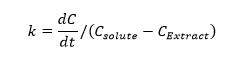
Where dC/dt is the rate of change of concentration of the solute in the extracting phase, and C1 and C2 are the concentrations of the solute in the feed and extracting phases, respectively.
Diffusion Coefficient (D): The diffusion coefficient represents the solute diffusion rate through the solvent phase. It can be calculated using the following equation:
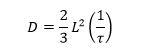
where L is the length of the diffusing path, and τ is the mean residence time of the solute in the solvent phase.
Interfacial area (a): The interfacial area represents the surface area per unit volume of the contacting phase. It is an important parameter in determining the mass transfer rate in solvent extraction. It can be calculated using the following equation:
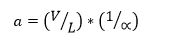
Where V is the volume of the contacting phase, L is the diffusion path length, and α is the interfacial area per unit volume.
Extraction Rate (R): The extraction rate represents the rate at which the solute is extracted from the feed solution by the solvent. It can be calculated using the following equation:

Where k is the mass transfer coefficient, a is the interfacial area, and Csolute and Cextract are the concentrations of the solute in the feed and extracting phases, respectively.
These equations are just a few examples of the kinetics equations used in solvent extraction. The specific equations and parameters used depend on the system being studied and the properties of the solute and solvent.
Solvent Extraction for Copper Leached Solution
Solvent extraction is a widely used process for recovering Copper from leached solutions. Here is a basic overview of the process:
Leaching: Leaching is the first step in the process of copper leaching, in which the Copper is extracted from the ore or concentrated using an acidic or alkaline solution. This step results in a leached solution containing copper ions (PLS).
Extraction: The leached solution is then contacted with an organic solvent, such as an extractant, which selectively extracts the copper ions from the aqueous phase into the organic phase. The most commonly used extractants for Copper are oximes and hydroxy oximes ( i.e., industrial examples include Acorga by Solvay). The extraction is typically done in a mixer-settler or a solvent extraction column.
Stripping: Once the Copper is extracted into the organic phase, it is stripped or transferred back into an aqueous phase, typically with an acidic solution, which results in a stripped solution containing the copper ions called the copper electrolyte.
Electrowinning: The stripped solution (copper electrolyte) is then subjected to electrolysis in an electrowinning cell, in which the copper ions are reduced to metallic Copper on the cathode. The resulting copper metal is then collected and processed.
Overall, the solvent extraction process for copper recovery from leached solutions involves several stages, including the first step of leaching, extraction, stripping, and electrowinning. The efficiency of the process depends on the properties of the ore or concentrate, the characteristics of the leaching solution and the extractant, and the operating conditions of the solvent extraction plant.
The general structural chemical equation for the reaction of copper ions with a hydroxy oximes extractant:

In this equation, R2C=NOH represents the hydroxy oximes extractant, which has a structure containing two R groups and a NOH functional group. Cu2+ represents the copper ions present in the leached solution. The reaction results in forming a copper-extractant complex, R2C=NO-Cu2+, which is extracted into the organic phase during the solvent extraction process.
The exact structure of the hydroxy oximes extractant and the resulting copper-extractant complex can vary depending on the extractant used and the conditions of the extraction process. However, the general chemical reaction between copper ions and hydroxy oximes extractants follows the same basic principle of forming a copper-extractant complex that is selectively extracted into the organic phase.
Carbon Adsorption and Gold Leached Solution
Carbon Adsorption
Carbon adsorption is a process used to treat gold-leached solution, which involves using activated carbon to adsorb the gold and other precious metals from the solution. This process is commonly used in the mining industry to recover valuable metals from ore.
The carbon adsorption process begins by passing the gold-leached solution through a bed of activated carbon. Activated carbon is a highly porous material with a large surface area for adsorption. The gold in the leached solution is attracted to the carbon particles’ surface through adsorption.
As the gold-leached solution passes through the carbon bed, the gold is adsorbed onto the surface of the carbon particles. The remaining solution, which is now depleted of gold, is removed from the system.
Once the carbon bed is saturated with gold, the adsorption process is stopped, and the carbon is removed from the system. The gold is then desorbed from the carbon using a process known as elution. During elution, the carbon is washed with a hot cyanide solution that dissolves the gold from the carbon particles.
The gold-cyanide solution that is produced during elution is then sent through a series of steps to recover the gold. The gold is typically precipitated out of solution using zinc and then smelted to produce gold bullion.
Carbon adsorption is a highly effective process for recovering gold from leached solution. It is a widely used method in the mining industry due to its efficiency and cost-effectiveness.
Activated carbon adsorption is a versatile process with many other applications beyond the treatment of gold-leached solution. Here are some different common ways in which activated carbon adsorption is used:
Water treatment: Activated carbon is commonly used to treat drinking water and wastewater to remove impurities and contaminants such as chlorine, volatile organic compounds (VOCs), and disinfection by-products. It is also used to remove taste and odor compounds.
Air purification: Activated carbon is used in air purification systems to remove volatile organic compounds (VOCs), fumes, and odors from the air. It is commonly used in industrial settings, as well as in homes, to improve indoor air quality.
Gas separation: Activated carbon can be used to separate gases such as carbon dioxide and methane from other gases. This process is commonly used in natural gas processing and biogas production.
Medical applications: Activated carbon is used to treat poisonings and overdoses. It can also be used in filters to remove impurities from medical gases and liquids.
Food and beverage industry: Activated carbon is used in the food and beverage industry to remove impurities and contaminants from products such as sugar, wine, and beer.
Overall, activated carbon adsorption is widely used with many applications across various industries. Its effectiveness, affordability, and versatility make it popular for removing impurities and contaminants from liquids and gases.
Ion Exchange and Uranium Leached Solution
Ion exchange is a process in which ions of one type are exchanged for ions of a different kind in a solution using a solid matrix. The solid matrix, known as the ion exchange resin, contains functional groups that attractions of the desired type and can release ions of another kind.
The principles behind ion exchange are based on the fact that ions in solution are attracted to surfaces that have the opposite charge. The functional groups in the ion exchange resin have a fixed charge, either positive or negative, which attracts ions of the opposite charge.
For example, the functional groups in a cation exchange resin have a negative charge and attract positively charged cations. As a solution containing cations is passed through the resin bed, the cations are attracted to the functional groups and exchange places with the cations on the resin. The exchanged cations can be collected, and the resin can be regenerated by rinsing it with a solution containing the desired cations.
Similarly, in an anion exchange resin, the functional groups have a positive charge and attract negatively charged anions. As a solution containing anions is passed through the resin bed, the anions are attracted to the functional groups and exchange places with the anions on the resin. The exchanged anions can be collected, and the resin can be regenerated by rinsing it with a solution containing the desired anions.
The effectiveness of ion exchange depends on the properties of the ion exchange resin, such as its selectivity for particular ions and capacity to exchange ions. It is widely used in water treatment, chemical purification, and many other industrial processes.
In a cation exchange reaction, the functional groups in the ion exchange resin are typically represented as R-SO3–, and the cations of interest in solution as M+. The reaction between the cation and the resin is as follows,

In this equation, the negative charge on the functional group attracts the positively charged cation in the solution, and the cation is exchanged with the cation on the resin. The resulting complex

is adsorbed onto the resin. Similarly, in an anion exchange reaction, the functional groups in the ion exchange resin can generally be represented as

, and the anions in solution as X–, the equation for the reaction between both species is as follows,

In this equation, the functional group’s positive charge attracts the solution’s negatively charged anion, and the anion is exchanged with the anion on the resin. The resulting complex

is adsorbed onto the resin. Ion exchange is commonly used in the extraction of uranium from leached solutions. The leached solution typically contains a mixture of ions, including uranium, other metals, and various impurities. The goal is selectively to remove the uranium from the solution and concentrate it for further processing.
One approach is to use an ion exchange resin that selectively binds to uranium ions. This resin is typically based on a material with functional groups with a high affinity for uranium, such as amidoxime or iminodiacetic acid. The resin is loaded into a column, and the leached solution is passed through the column. The uranium ions in the solution are attracted to the functional groups on the resin and become bound to it, while the other ions pass through the column and are discarded. Once the resin is loaded with uranium, it can be eluted with a solution that breaks the uranium-resin bond, releasing the uranium ions into a concentrated solution. This solution can then be further processed to recover the uranium through precipitation or solvent extraction.
Ion exchange is a highly effective method for extracting uranium from leached solutions because it allows for the selective removal of uranium from a complex mixture of ions. It is a relatively simple and low-cost method compared to other techniques, such as solvent extraction or precipitation. However, the choice of ion exchange resin and operating conditions must be carefully optimized to ensure efficient uranium extraction and minimize the uptake of other metals and impurities.
The flowsheet for the Ion Exchange process is as follows:
Pre-treatment: The feed solution is pretreated to remove any solids or particles that could foul the resin. This may involve filtration or settling.
Loading: The feed solution is passed through an ion exchange column containing the resin. The target ions are selectively adsorbed onto the resin, while other ions pass through the column and are discarded. This step can be repeated multiple times to achieve a high loading level.
Regeneration: Once the resin is loaded with the target ions, it must be regenerated to remove them from the resin and prepare it for reuse. This is done by passing a regenerant solution through the column that reverses the ion exchange process, releasing the target ions from the resin and replacing them with ions from the regenerant solution. Depending on the resin and target ions, the regenerant solution may be an acid or base.
Rinse: After regeneration, the resin is rinsed with water to remove any remaining regenerant solution and ensure it is ready for the next loading cycle.
Product recovery: The product containing the target ions is collected from the eluate or rinse stream. This product may undergo further processing or be used directly.
Disposal: The spent regenerant solution and rinse water may contain high concentrations of contaminants and must be treated before disposal.
This is a simplified example, and the process details will depend on the specific application and the properties of the ion exchange resin and target ions. Other ion exchange reactions include the reaction of zeolites, which is given by.



Where M is a cation of the groups I or II in the periodic table, Z is the number of molecules of hydration. Zeolites are minerals containing mainly aluminum and silicon compounds. They are useful as drying agents, in detergents, and in water and air purifiers. Other uses of Zeolite can be found in the adsorption process, for example, ion exchange and odor removal (both gases and liquids). Zeolites are also used as dietary supplements to treat cancer, diarrhea, autism, herpes, hangover, balance pH, and remove heavy metals from the body, just like activated carbon.
References
Francis Dakubo, James C. Baygents, James Farrell “Peroxodisulfate assisted leaching of chalcopyrite” Hydrometallurgy Volumes 121–124, June 2012, Pages 68-73
K. Yoo et al. Effect of chloride ions on leaching rate of chalcopyrite Minerals Engineering (2010)
M.D. Sokić et al. Kinetics of chalcopyrite leaching by sodium nitrate in sulphuric acid Hydrometallurgy (2009)
K.-H. Park et al. A study on the oxidative ammonia/ammonium sulphate leaching of a complex (Cu–Ni–Co–Fe) matte Hydrometallurgy (2007)
M. Niinae et al. “Preferential leaching of cobalt, nickel and copper from cobalt-rich ferromanganese crusts with ammoniacal solutions using ammonium thiosulfate and ammonium sulfite as reducing agents” Hydrometallurgy (1996)
A. Mukherjee et al. “Dissolution of Cu, Co and Ni from ocean nodules by l-ascorbic acid Chem. Eng. Process. Process Intensif. (2005)”
J. Lu et al. “Copper chloride leaching from chalcopyrite and bornite concentrates containing high levels of impurities and minor elements”, Hydrometallurgy (2013)
S. Koleini et al. “Acidic sulphate leaching of chalcopyrite concentrates in presence of pyrite”, Minerals Engineering, (2011)
K. Han et al. “Ammonia-ammonium leaching of deep-sea manganese nodules”, Int. J. Minerals Engineering Process (1974)
O. Gok et al. “Dissolution of low-grade chalcopyrite concentrate in acidified nitrite electrolyte”, Hydrometallurgy, (2013)
J. Dutrizac “The leaching of sulphide minerals in chloride media”, Hydrometallurgy, (1992)
C.G. Anderson “Alkaline sulfide gold leaching kinetics”, Minerals Engineering, Volume 92, June 2016, Pages 248-256
C.G. Andersonet al.”Hydrometallurgical processing of gold bearing copper enargite concentrates” Can. Metall. Quarter. John Dutrizac Hydrometall. Symp. Spec. Issue (2008)
Rare Earth (in Chinese), Metallurgical Industry Press, Beijing, 1978. p. 319.
Q. Han, J. Yang, J. Li, The review of high purity europium oxide purification technology, Hunan Nonferrous Met. (in Chinese) 28 (6) (2012) 26–29, 61.
B. Li, C. Yan, S. Gao, X. Guangxian, New progress of countercurrent extraction theory-optimization of 3-outlet extraction process and design example, Chin. Rare Earths (in Chinese) 7 (6) (1986) 8–14.
L. Li, R. Yang, Lanthanons chemistry (III)—Europium reduction by light, Proceedings of Fourth Conference of Rare Earth Chemistry & Hydrometallurgy (in Chinese) 1987.
R. Li, X. Li, R. Yang, Light chemistry of Lanthanides(V): light reduction and separation & purification of europium from Sm.Eu.Gd enrichment, J. Lazhou Univ. (in Chinese) 24 (1) (1988) 113–114 .
R. Yang, et al., A method of extraction separation of europium oxide of fluorescence grade by light reduction (in Chinese), Chinese Patent: CN 1033783A, 1989.
J. Liu, Application of electrochemistry in hydrometallurgy of rare earth elementsdII. Electrolyzing reduction europium and separation process, Chin. Rare Earths 17 (3) (1996) 51–56 (in Chinese).
S. Padovani, C. Sada, P. Mazzoldi et al., “Copper in glazes of renaissance luster pottery: nanoparticles, ions, and local environment,” Journal of Applied Physics, vol. 93, no. 12, pp. 10058–10063, 2003.
A. A. Zagorodni, Ion Exchange Materials Properties and Applications, Elseiver, Oxford, UK, 1st edition, 2007.
N. B. Chernjatskaja, “Sorption of strontium on clinoptilolite and heulandite,” Radiochemistry, vol. 27, pp. 618–621, 1988.