My Books
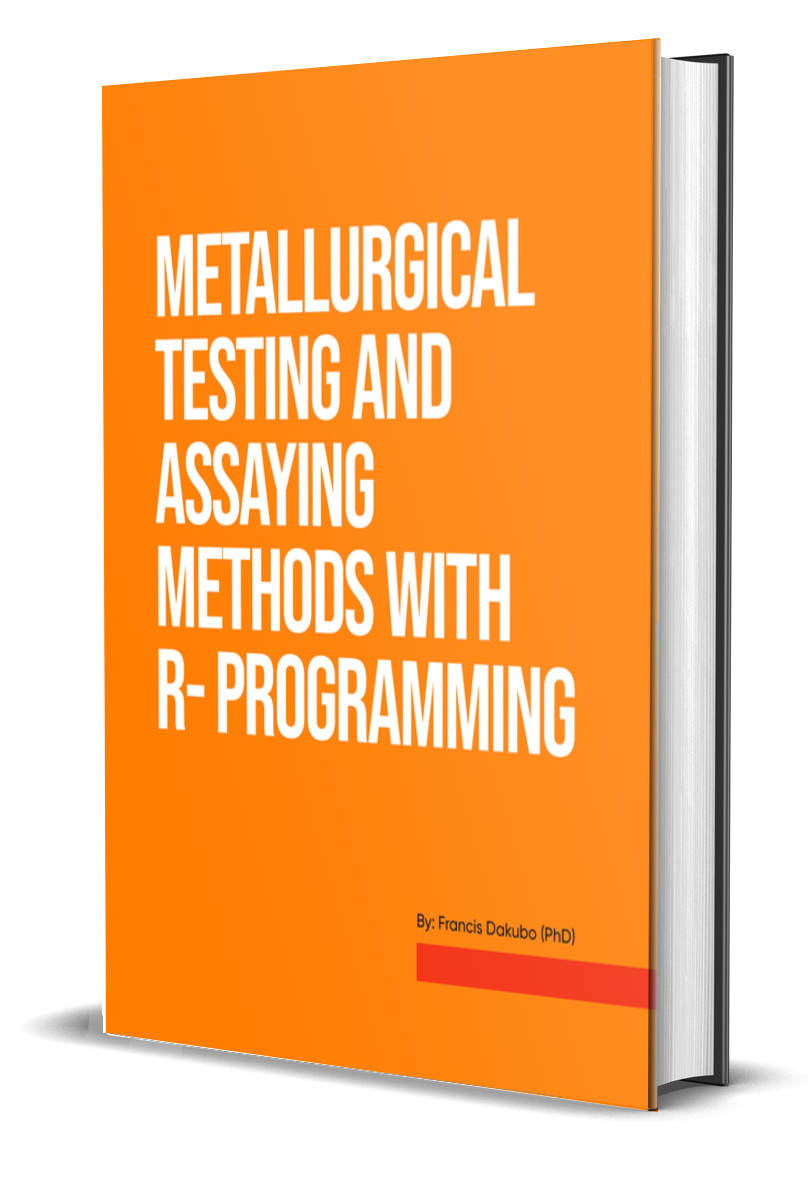
Metallurgical Testing And
Assaying Methods with R-Programming
Metallurgical testing and assaying have been around since man began using minerals and metals such as gold, silver, copper, iron, etc. As time passes, we continuously find ways to do things more efficiently. In the spirit of doing things efficiently, we produce this book to incorporate using statistical software such as R-programming and experimental design in metallurgical and assay analysis. This text completes the gap between theory and application via testing, analysis Of experimental results, and visualization Of a wide range Of repeatable metallurgical experiments suitable for fieldwork and university laboratory practical work. Throughout this text, the author presents a relationship between theory and experiments while maintaining the importance of experiments in improving our everyday life. This text includes not only metallurgical and assay testing via illustration, but also diverse and clear descriptions of steps needed for the successful reproduction of the experiments. In this text, an additional section is devoted to introducing R-programming. The manuscript is well written and done, it can be used alongside my text on aqueous metallurgy. As the use Of data keeps increasing in the process industry, this text is very much needed in the metallurgical and chemical industries. It is therefore written for metallurgical, chemistry, and chemical engineering students and those in the field.
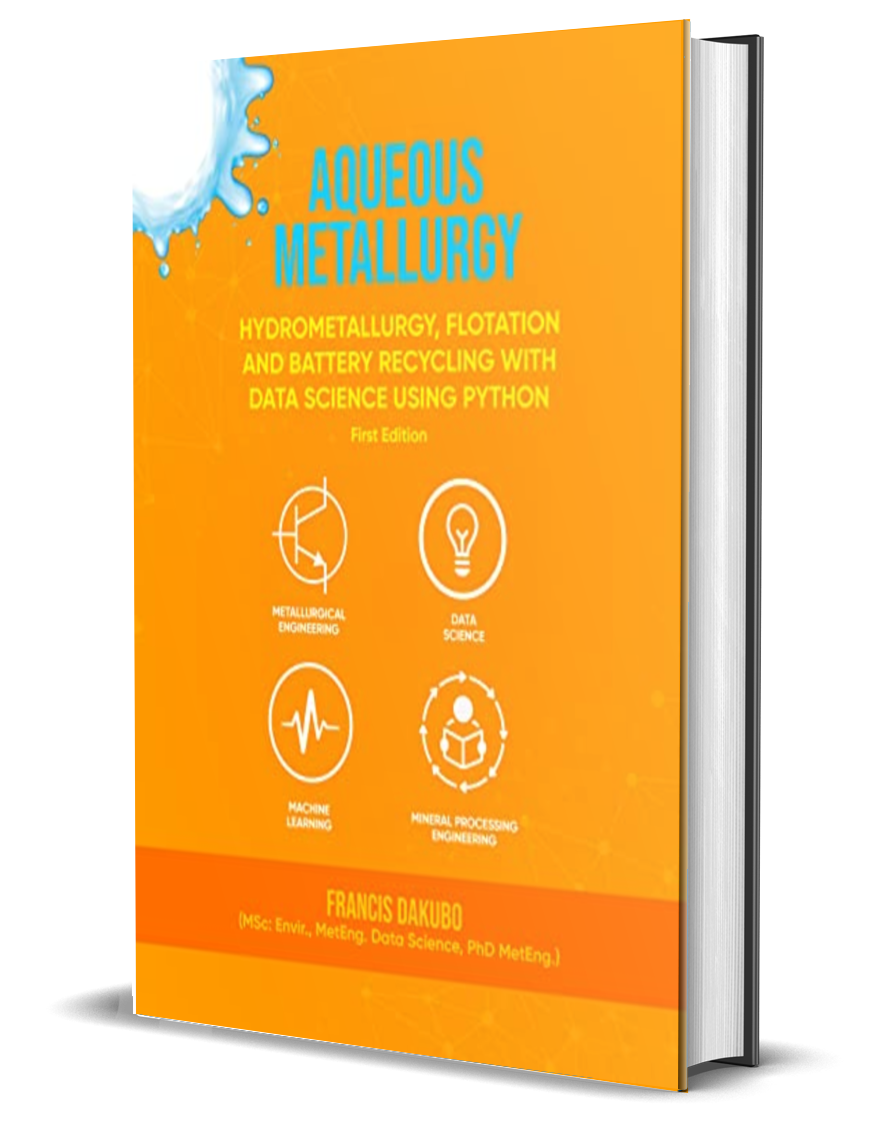
Aqueous Metallurgy: Hydrometallurgy,
Flotation and Battery Recycling with Data Science Using Python
This book, titled aqueous metallurgy, flotation, and battery recycling with Python, is written for the practicing metallurgical, chemical, environmental, geochemical, mining, microbiologist, and geological engineering students and scientists who want to learn the theory behind most of the processes in aqueous metallurgy. This book is also helpful for engineering students and scientists interested in learning the practical use of modern software such as Python in solving problems. This book covers hydrometallurgy, interfacial phenomena, and flotation; additional topics covered include mixing theory, battery recycling, and an introduction to data science using Python and SageMath.
As we advance into the future, our demand for new minerals and metals increases for use in making energy and building faster computers and machines.
It is essential to ensure that our students and workforce of the feature are equipped with all the engineering tools to deliver their services optimally.
This aqueous metallurgy book is written to equip practicing engineers and students with modern metallurgical and computational skills in Python to operate with the proper knowledge and computer skill for optimal output.
Managers, Engineers, Scientists, and other technology in the metallurgical, chemical, environmental, and mining industries, from the laboratory to the plant teams, will benefit from the information provided in this book. This book on aqueous metallurgy highlights the theory and some practical knowledge required in all mineral and metallurgical industries. This book could be used alone or in conjunction with my metallurgical testing and assaying book, which contains a step-by-step approach to conducting practical experiments in the laboratory and pilot plant.